When AI fills in the gaps, what counts as real evidence?
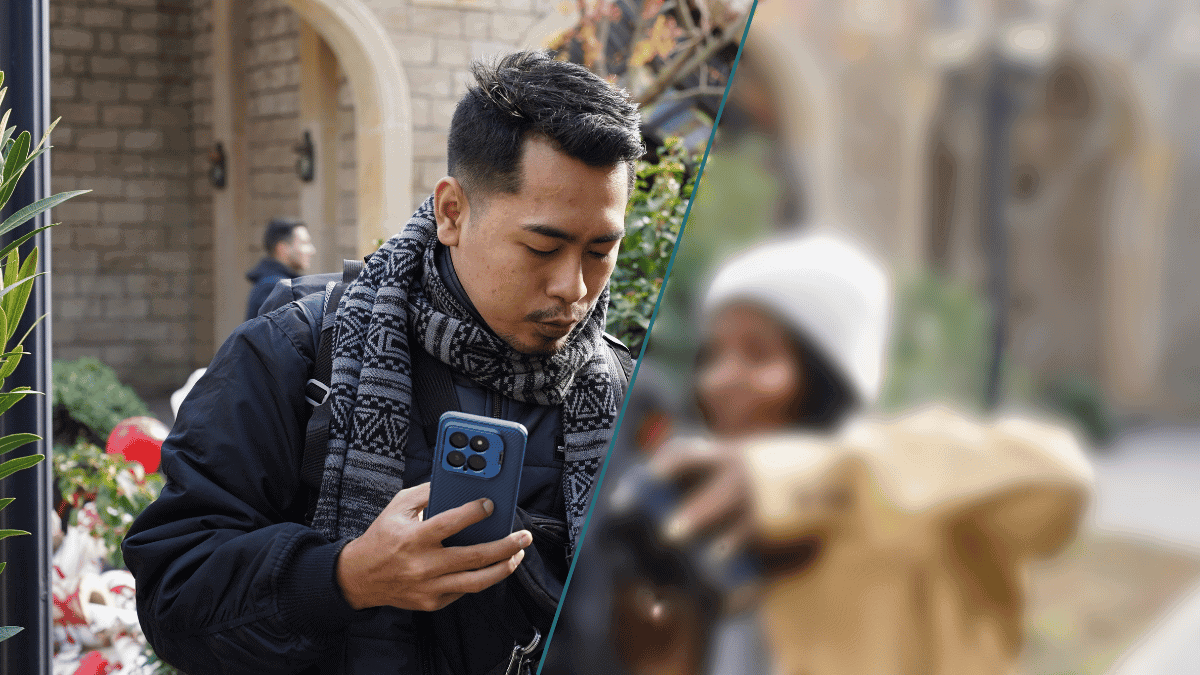
AI is increasingly being used to analyse low-quality imagery that would previously have been considered too blurry, distant, or incomplete to provide reliable intelligence.
Recent reporting around military surveillance suggested AI systems were able to help identify naval assets from low-quality satellite imagery by enhancing and reconstructing visual information before analysing it.
At one level, that sounds like a straightforward technology story: better image analysis, better intelligence, better visibility. But underneath it sits a much bigger shift.
For a long time, poor image quality acted as a kind of natural limitation:
- too far away
- too pixelated
- too unclear
- too degraded
That did not just limit convenience. It limited certainty.
Now AI systems are increasingly able to enhance, reconstruct, and interpret visual information that humans would previously have struggled to use. And that changes something important: “blurry” is no longer necessarily unusable.
AI is not just enhancing images. It is interpreting them.
This is where the conversation becomes more complicated.
Many modern AI image systems do not simply sharpen existing detail like a traditional photo-editing tool. They often predict, reconstruct, or statistically infer what should appear in missing or degraded areas of an image. In other words:
- part of what you see may be recovered signal
- part may be AI-generated interpretation
That creates an uncomfortable tension, particularly in areas where accuracy matters. Are we looking at what was actually there? Or what the model believes was probably there? That distinction matters a great deal in:
- intelligence
- surveillance
- security investigations
- insurance claims
- policing
- forensic analysis
Because the better AI gets at reconstructing information, the harder it may become to know what was genuinely observed and what was artificially enhanced.
AI is changing who gets visibility
Historically, high-level image analysis and surveillance required expensive infrastructure, specialist expertise, and state-level capabilities. But AI is lowering some of those barriers. The ability to extract useful information from poor-quality imagery is becoming faster, cheaper, and more accessible through commercial AI tooling. That potentially changes who can perform sophisticated analysis:
- governments
- investigators
- journalists
- insurers
- security firms
- eventually ordinary consumers
And the implications go far beyond military intelligence. The same underlying technology can apply to:
- CCTV footage
- insurance claims
- licence plate recognition
- satellite imagery
- social media footage
- smartphone photography
- facial analysis systems
Which means society may be entering a period where low-quality visual evidence becomes increasingly recoverable, but also increasingly interpretable.
The hidden risk may be overconfidence
The danger is not necessarily that AI enhancement is useless. In many cases, it may genuinely help identify meaningful patterns humans would otherwise miss.
The bigger risk may be confidence.
As AI-generated reconstruction becomes more convincing, people may start treating interpreted imagery as objective truth rather than probabilistic analysis. And that could quietly reshape how organisations think about evidence itself.
Because historically, uncertainty was visible. A blurry image looked blurry. But AI systems are making uncertainty look clearer.
And that may become one of the most important trust challenges AI creates over the next few years.
Image sources
- manipulated face-1200: ©Tahir Xəlfə from Pexels via Canva.com