For Once, Everyone Is Learning Together
Experience has traditionally been one of the most valuable assets in the workplace.
People spend years developing expertise, building knowledge and learning how their industry operates. Organisations rely on that experience to make decisions, solve problems and guide others through change. In most professions, there is a clear difference between someone who has spent twenty years doing the job and someone who is just starting out.
That is one of the reasons the current moment feels so unusual.
While artificial intelligence is already beginning to influence how people work, very few individuals can claim decades of experience using it. The technology is evolving rapidly, new tools are appearing constantly and organisations are still working out how these capabilities fit into everyday work. In many respects, everyone is learning at the same time.
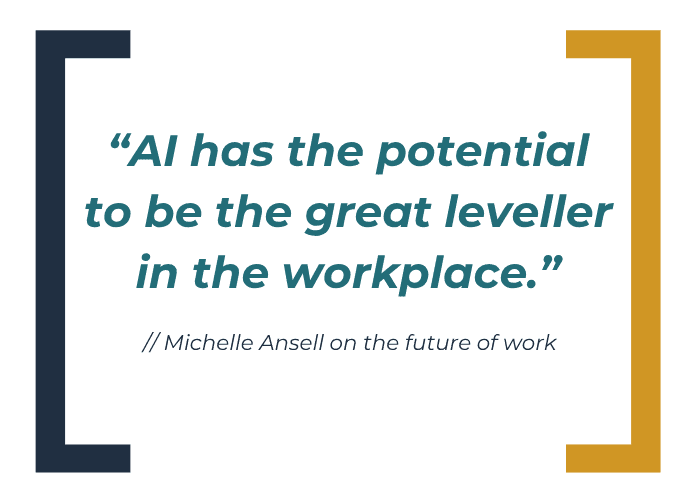
During a recent conversation about careers, skills and the future of work, Michelle Ansell, Douglas Jackson captured this idea through a different lens. Rather than focusing on disruption or replacement, she suggested that AI has the potential to become an unexpected leveller within organisations.
At first glance, that might seem difficult to believe.
Professional life is usually shaped by experience. Some people have spent decades building expertise, leading teams and developing specialist knowledge. Others are just beginning their careers. In most situations, those differences matter and influence how people contribute, learn and progress.
Yet AI creates a slightly different dynamic.
While experience, judgement and domain knowledge remain incredibly valuable, nobody has spent twenty years working with today’s AI tools. There is no established playbook that explains exactly how organisations should use them, nor a generation of workers who have spent an entire career mastering them. Whether someone is a graduate entering the workforce or a senior executive leading an organisation, there is still an element of experimentation, learning and discovery. That does not mean expertise suddenly becomes irrelevant.
An experienced doctor still understands healthcare better than someone at the start of their career. A lawyer still brings years of professional judgement. An engineer still possesses specialist knowledge that cannot be replaced by a new tool. Context, experience and expertise continue to matter enormously. What may be changing is where new ideas come from.
In many organisations, the people experimenting with AI, testing new approaches and exploring different ways of working are learning alongside colleagues with significantly more experience. In some situations, curiosity and a willingness to experiment may be just as important as seniority.
In that sense, AI has the potential to become an unexpected leveller within the workplace. Experience still matters, but understanding how these new tools fit into everyday work is something that everyone is learning in real time. Valuable insights can come from graduates, managers, executives and specialists alike because nobody has decades of experience working with today’s AI systems.
That creates an interesting opportunity for organisations. Many workplaces are built around the assumption that knowledge flows from the most experienced people to everyone else. AI challenges that pattern because learning is happening across teams, departments and levels of seniority at the same time.
Viewed through that lens, AI is not removing the value of expertise. Instead, it is creating a rare moment where expertise and experimentation sit side by side. For once, everyone is learning together.
Image sources
- michelle ansell level quote-700: ©Michelle Ansell interview with Decoded Thinking
- team working-1200: ©dorian2013 from Getty Images Pro and ©hidesy from Getty Images Signature via Canva.com