AI Is Starting To Reshape Cities, Not Just Screens
AI often feels weightless. Most people’s experience of it happens through a chat window, a search box or an app. A question is typed, an answer appears, and the technology seems to exist entirely in the digital world. That perception can be misleading.
Behind every AI-generated response sits a growing network of data centres, power infrastructure, office buildings, fibre connections and specialist talent. The technology may feel virtual, but the systems supporting it are becoming increasingly physical. As organisations race to develop and deploy AI, the conversation is beginning to shift away from models and software towards the resources required to support them.
Energy. Land. Cooling. Compute. Grid capacity.
Increasingly, these are becoming some of the most important factors shaping the future of AI.
The New Bottlenecks
Recent developments in the UK illustrate the challenge. OpenAI has reportedly slowed parts of its UK Stargate ambitions amid infrastructure and regulatory concerns. At the same time, Anthropic continues to expand its presence in London, while demand for AI-related office space, technical talent and specialist services continues to grow.
Taken together, these developments point towards a shift in the conversation. For much of the last few years, attention focused on models, capabilities and software. Increasingly, however, a different set of questions is emerging. Can the electricity grid cope with growing demand? Is there enough data centre capacity? How quickly can new facilities be built? Where will organisations find the people needed to develop, deploy and manage these systems?
These are not software questions. They are infrastructure questions.
AI Becomes Physical
The impact of those decisions is becoming increasingly visible beyond the technology sector itself.
London is being positioned as a major AI hub, with organisations including OpenAI, Anthropic and Google DeepMind expanding their presence in and around King’s Cross. What makes this interesting is not simply the growth of individual companies, but the wider ecosystem forming around them. Office developments, recruitment, local services, university partnerships and supporting businesses are all becoming part of the story.
That creates an interesting contrast with the way AI is often discussed. Public conversations tend to focus on automation, productivity and digital transformation, yet many of the clearest signs of growth are surprisingly tangible. AI is becoming visible through the buildings people work in, the investment flowing into local economies and the physical infrastructure required to support continued expansion.
Far from making geography irrelevant, AI may be making certain locations more important. Access to talent, research institutions, energy infrastructure and investment is helping shape where AI companies choose to grow, and in turn influencing how cities develop around them.
Beyond The Software Story
This is the part of the AI conversation that often gets overlooked.
At the same time as headlines focus on automation and efficiency, companies are expanding offices, hiring staff and investing heavily in long-term infrastructure. New service ecosystems are emerging around deployment, governance, training and integration. Demand for AI-related skills continues to grow, even as some routine tasks become easier to automate.
The result is a more complicated picture than many of the headlines suggest. AI is changing work, but it is also creating new forms of work. It is influencing what happens on screens, but it is also affecting what gets built beyond them. As investment flows into data centres, office developments, energy infrastructure and specialist skills, the technology is becoming increasingly visible in the physical world.
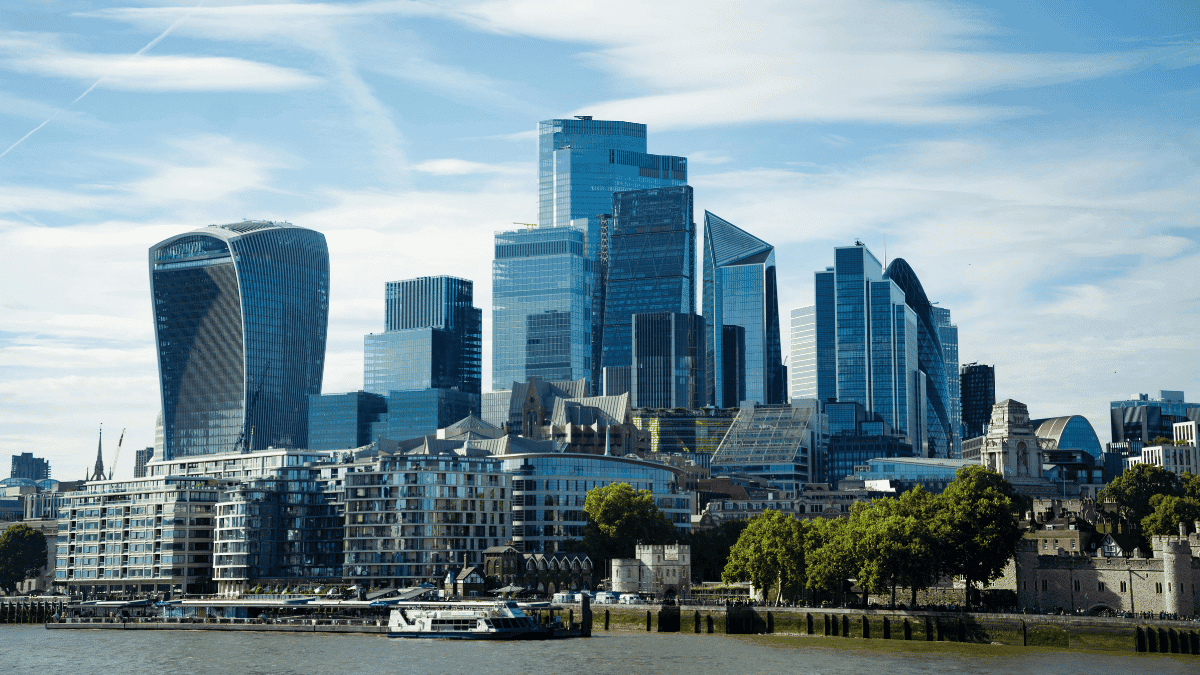
For years, AI was discussed as though it existed primarily in the digital realm. Increasingly, it is becoming visible in buildings, power networks, investment decisions and city skylines.
AI is starting to reshape cities, not just screens.
Image sources
- london skyline-1200: ©Ismail Maqbool from Pexels via Canva.com