You’re Still In Charge

AI conversations often swing between two extremes.
On one side is the promise that AI will transform the way we work. On the other is the fear that it will make decisions on our behalf, replace judgement and remove human control from important processes.
During our conversation, Rob Clarke offered a simpler perspective.
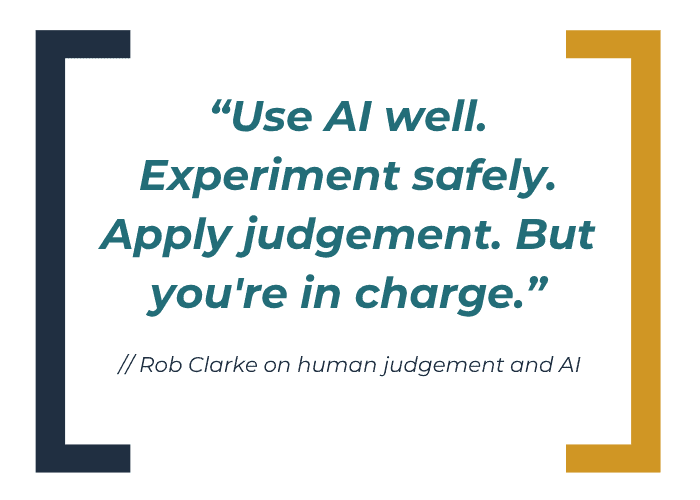
The observation stood out because it cuts through much of the noise surrounding AI adoption.
Many of the most useful discussions about AI are not really about the technology itself. They are about responsibility. When should we trust an AI-generated answer? When should we question it? When should we seek additional evidence or challenge the recommendation being presented?
The answer is rarely found in the technology alone.
AI can help people work more efficiently, explore ideas more quickly and access information more easily. But responsibility does not transfer to the tool. The person using it still has to make decisions, apply context and exercise judgement.
That can sometimes feel less exciting than stories about breakthrough capabilities or future predictions.
It is also what makes AI useful.
The goal is not to remove people from the process. It is to give them better tools to support the decisions they already make.
As AI becomes more widely available, perhaps the most important skill is not knowing how to use the technology.
It is remembering that you are still responsible for the outcome.
You are still in charge.
Watch Rob Explain It
One of the things that doesn’t always come across in writing is Rob’s delivery. This short clip captures the point perfectly and explains why judgement remains such an important part of using AI well.
Image sources
- rob clarke experiement quote-700: ©Rob Clarke interview with Decoded Thinking
- leader plane-1200: ©christianhorz and ©Airplane paper direction white g from Ofelia Diaconu's Images via Canva.com