When Identity Becomes Something To Protect
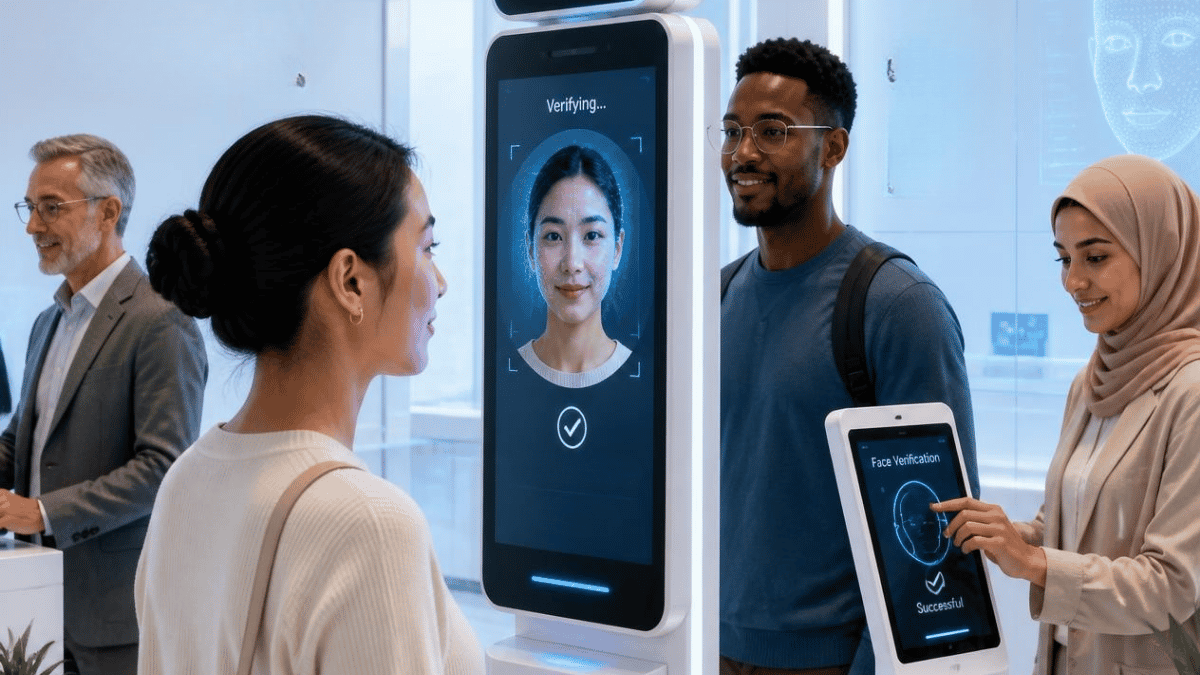
For much of the internet’s history, identity was something we rarely questioned.
A familiar face, a recognisable voice or a trusted name was usually enough to establish authenticity. If someone appeared on television, joined a video call or posted online, there was little reason to wonder whether they were really who they claimed to be.
Artificial intelligence is starting to change that. As AI makes it easier to copy faces, clone voices and simulate personalities, the question is no longer just whether content is real. Increasingly, it is whether the person behind it is. That shift is changing how platforms verify users, how public figures protect themselves and, perhaps, how all of us will think about identity in the future.
From “Prove You’re Not A Robot” To “Prove You’re Human”
For years, the internet asked us to prove one simple thing: that we weren’t robots. We clicked traffic lights, identified bicycles and ticked CAPTCHA boxes, all designed to stop automated systems pretending to be people. It became such a familiar part of being online that most of us barely noticed it.
Today, that challenge is beginning to reverse. Instead of asking whether we’re robots, platforms are increasingly asking whether we’re human. Dating apps are dealing with AI-generated profile photos, video platforms are exploring ways to tackle deepfakes in meetings, and online communities are seeing growing numbers of bots that are becoming harder to distinguish from real users.
It may sound like a subtle difference, but it reflects a fundamental shift. The internet is moving from filtering out machines to verifying people.
When Identity Can Be Copied
The change extends far beyond social platforms. Deepfakes have already shown how easily familiar faces and voices can be used to create convincing scams. Martin Lewis has repeatedly warned about fraudulent advertisements using AI-generated versions of his image to promote fake investments. The technology works not because people are careless, but because it borrows years of trust that someone else has built.
Public figures are beginning to respond; Taylor Swift and Luke Littler are among the public figures taking steps to protect their image and identity as AI-generated impersonation becomes more common. These stories are often reported as celebrity news, but together they point towards something much larger. For years, celebrities protected their names, logos and merchandise. Increasingly, they’re also trying to protect something far more personal: their face, voice and likeness.
Building A Second Layer Of The Internet
As identities become easier to imitate, platforms are searching for new ways to establish authenticity.
Projects such as Worldcoin have proposed using biometric information, including iris scans, to create a digital credential proving that someone is a unique human. Whether iris scanning becomes the long-term solution is almost beside the point. The more interesting question is why ideas like this are emerging at all.
If faces, voices and even personalities can be copied, the internet needs another way to establish trust. That’s why platforms are beginning to build a second layer beneath the content itself, one focused on proving who created it. The internet has always had a content layer. Increasingly, it is developing an identity layer as well.
More Than A Celebrity Problem
Today, these conversations are most visible among celebrities because their identities already carry significant commercial value. Over time, however, the same questions are likely to reach everyone else. If AI continues to make identity easier to imitate, proving who you are may become a routine part of everyday digital life rather than something reserved for public figures.
For decades, the internet largely assumed authenticity. AI is beginning to reverse that assumption.
The next challenge may not be creating a digital identity. It may be proving it’s really yours.
Image sources
- verification-1200: via Canva.com