Should AI content be labelled?
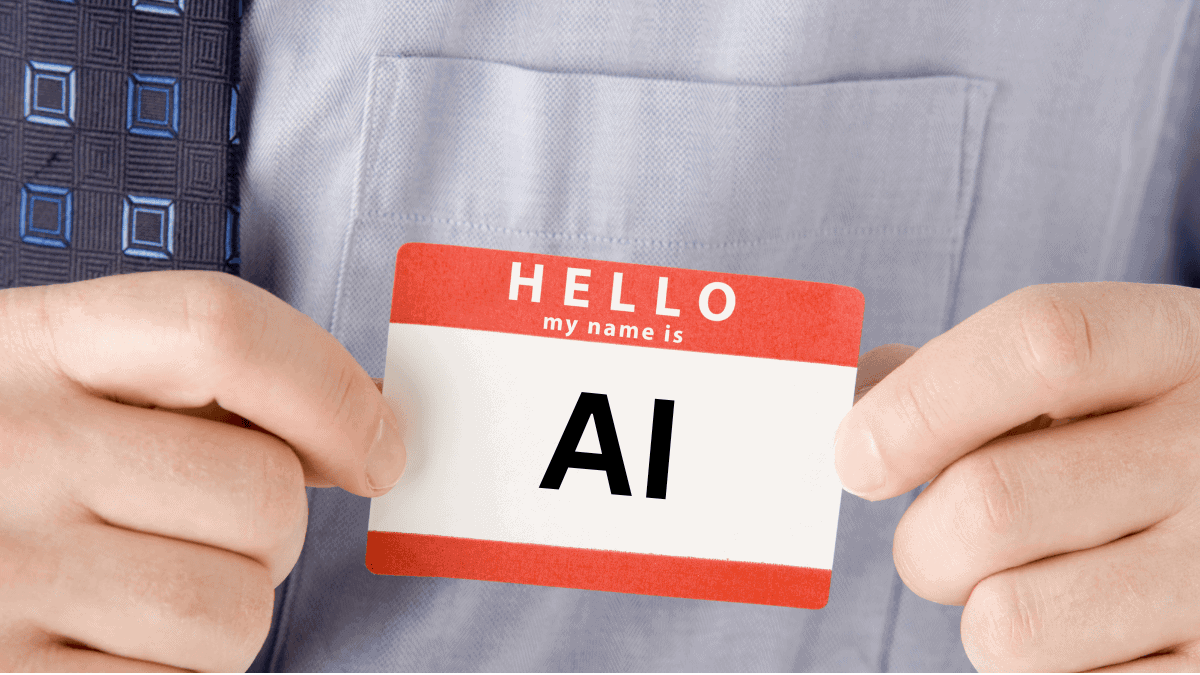
For a long time, the assumption behind most content has been simple. A person wrote it. Even when tools were involved, the final output was still understood as human-led.
That assumption is starting to feel less certain.
As AI-generated content becomes more common, the question isn’t just how it’s created, but whether that creation process should be visible. Not in a technical sense, but in a way that changes how the content is understood.
It’s not hard to imagine a near future where “human-written” starts to feel less like a default, and more like a distinction.
The idea of labelling
The suggestion that AI content should be labelled comes up frequently. On the surface, it feels straightforward. If something is generated using AI, people should know.
But once you move past the idea, it becomes less clear how that would actually work in practice.
Governments haven’t yet created consistent rules around labelling AI-generated content, and even where guidance exists, it’s often broad rather than specific. That leaves a series of open questions. Who would be responsible for applying labels, and at what point does content count as “AI-generated”? Is it when AI writes the first draft, or when it shapes part of the final version?
There’s also the question of enforcement. Even if labelling becomes expected, how would it be verified? Without a reliable way to check, labels risk becoming inconsistent or easy to ignore.
Where tools become part of the process
Part of the difficulty is that writing has never been purely manual. Spellcheck, grammar tools, and thesauruses have long been part of the process. They support how something is written without fundamentally changing who created it.
AI sits somewhere further along that spectrum, but not always in a clearly separate category.
If someone uses AI to rephrase a sentence, suggest a structure, or tighten wording, it’s not entirely different from using existing tools. The difference is in the level of involvement. AI can move from assisting to generating, and that shift isn’t always easy to define.
This makes the idea of labelling more complex, because the boundary isn’t fixed. It depends on how the tool is used, rather than the tool itself.
Where it starts to matter
In low-stakes situations, this may not feel particularly important. If a piece of content is useful or entertaining, the process behind it may not change how it’s received.
But in other contexts, the origin starts to matter more.
If content is shaping decisions, influencing opinions, or presenting itself as expertise, especially in areas where people assume credibility, knowing how it was created can affect how much weight people give it. Not because AI-generated content is inherently less valuable, but because the context around it is different.
This is where it starts to become less about disclosure, and more about trust.
A shift in perception
There’s also a cultural layer to this.
If AI-generated content becomes the norm in certain areas, then human-created content may start to stand out. Not necessarily because it’s better, but because it’s different. Slower, more deliberate, or simply less optimised.
That opens up the possibility of “AI-free” or “human-made” becoming a signal in itself. Or at least something people start to look for. Similar to how terms like organic or handmade are used, not just to describe how something was produced, but to suggest a certain type of value.
Whether that becomes meaningful or just another label depends on how people respond to it.
The grey area in between
One of the challenges with labelling is that most content won’t sit clearly on one side or the other.
AI might be used to generate ideas, structure a draft, or refine wording, while the overall direction remains human-led. In those cases, the output is neither fully AI-generated nor fully human-written.
Trying to draw a clear line in those situations can feel artificial. It also risks oversimplifying how content is actually created.
Where this leaves us
The question of labelling AI content isn’t just about transparency. It touches on authorship, responsibility, and how people assign trust to what they read.
For now, there isn’t a clear answer. The technology is evolving faster than the rules around it, and social expectations are still forming.
But the question itself is getting harder to ignore.
If AI becomes part of how most content is created, what does it mean to say something is human?
Image sources
- Name Tag-1200: ©Monkey Business Images via Canva.com