Decoded Thinking

Decoded Thinking

What Happens When Customers Bring Their Own AI?
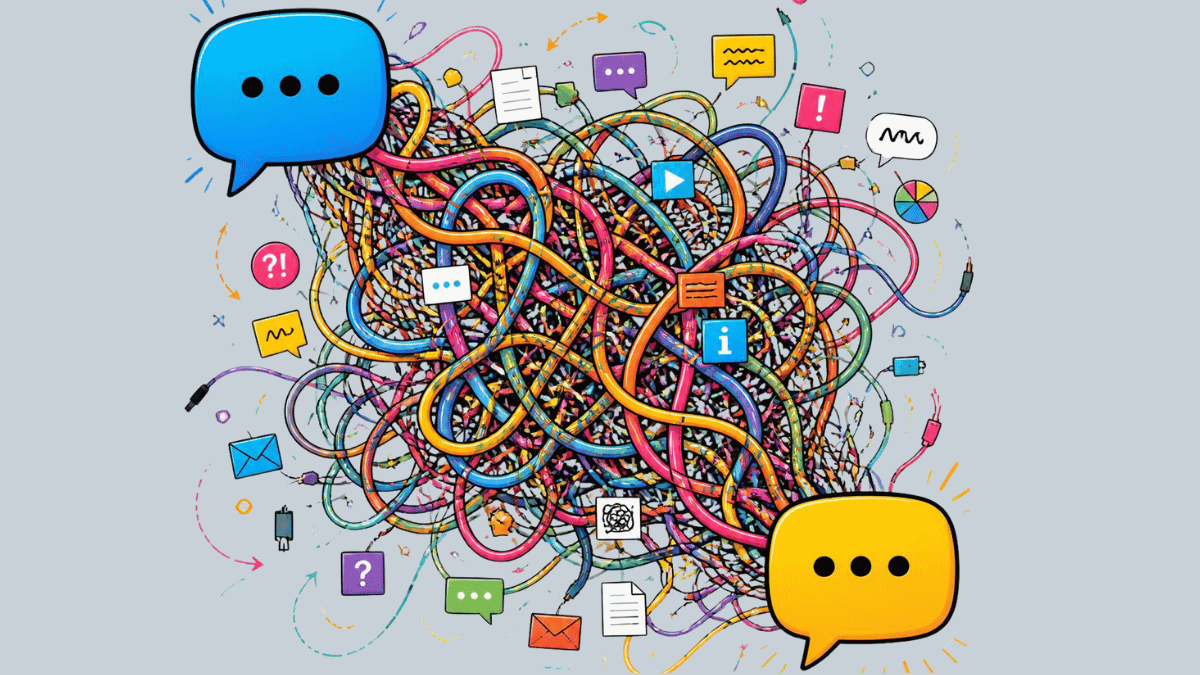
complex question

A recent BBC report revealed that a complaint about a missed bin collection grew from a single page into a 27-page legal submission with the help of AI, complete with case law and references to Acts of Parliament.

Twenty-seven pages about bins might be an extreme example, but it points to something customer service teams may increasingly have to deal with. Customers now have access to the same AI tools organisations are introducing into their own operations, and they’re using them to write complaints, research their rights, challenge decisions and navigate processes that might previously have felt difficult or intimidating.

AI can help people make themselves heard and communicate more confidently, but it can also turn a relatively simple issue into something considerably longer and more complicated for someone at the other end to unravel.

When AI Gives Customers A Bigger Voice

There is a genuinely positive side to this, because writing a formal complaint isn’t easy for everyone. Some people struggle with written communication, don’t know how to structure an argument or feel intimidated by the language and processes used by large organisations, so AI can help them organise their thoughts, explain what happened and communicate in a way they might previously have struggled to do.

For some customers, that could make services more accessible and give them greater confidence to challenge something they believe has gone wrong, but the difficulty comes when assistance turns into amplification. A relatively straightforward issue can become pages of formal arguments, regulatory terminology and legal references, leaving someone at the receiving organisation to work through all of it before they can establish what actually happened and what the customer needs.

Helen Pettifer from Helen Pettifer Training Ltd raised exactly this issue when we spoke, explaining that organisations were already seeing customers use tools such as ChatGPT, Gemini and Copilot to generate complaints. The result can be lengthy emails containing very little information about the customer’s specific account or circumstances, leaving teams to unpick all that additional language to find the actual complaint underneath it.

More Content Doesn’t Mean More Information

That’s perhaps one of the more interesting contradictions created by AI: customers can now produce communications that are longer, more polished and more authoritative-sounding without necessarily giving the organisation any more useful information.

It reminded me of an old Friends episode where Joey is writing a letter to support Monica and Chandler’s adoption application. Wanting to sound more intelligent, he uses a thesaurus to replace his perfectly understandable words with increasingly elaborate alternatives and ends up producing a letter that barely makes sense, even signing his name as “Baby Kangaroo Tribbiani.”

The joke works because making the language more elaborate doesn’t make the message any better, and there is something strangely familiar about that now. AI can turn a fairly simple customer complaint into something that looks far more authoritative, complete with legal terminology and regulatory references, without necessarily making it any clearer what actually happened or what the customer wants the organisation to do about it.

For customer service teams, that could create a very different kind of workload, because a complaint that might once have taken a few paragraphs to explain can arrive surrounded by pages of additional material that still needs to be read, assessed and responded to. Organisations can’t simply dismiss that material as AI-generated noise either, because somewhere underneath it may still be a real person with a perfectly legitimate problem that needs resolving.

Helen had a wonderfully circular suggestion for dealing with this: put the AI-generated complaint back into AI and ask it what the customer is actually complaining about. Her point was that teams need ways to cut through the legal and regulatory language and get back to the root cause. This creates the slightly absurd prospect of AI helping an employee understand the complaint that AI helped the customer write in the first place.

It may sound ridiculous, but it could also become an increasingly normal part of customer service, with AI being used on both sides of an interaction while the people involved are ultimately still trying to resolve the original problem.

Designing For AI-Enabled Customers

Complaints are only one example, with the same principle potentially applying to

  • appeals
  • insurance claims
  • product queries
  • negotiations
  • and requests for information.

Customers can now research an issue, understand their rights and construct much more sophisticated arguments with considerably less effort, potentially changing both the volume and type of information arriving into existing customer service processes.

That doesn’t mean organisations should discourage customers from using AI, particularly when the technology could be enormously valuable for someone who previously struggled to make themselves heard. It does mean they may need to think about how existing processes cope when a relatively simple customer issue arrives surrounded by significantly more information than it once would have.

There is also an important distinction between making those interactions easier to process and simply finding new ways to filter them out. If AI is used to summarise a lengthy complaint, for example, teams still need to be confident that important details haven’t disappeared in the process and that customers with genuine problems aren’t disadvantaged because of the way they chose to communicate them.

AI On Both Sides Of The Conversation

Perhaps the bigger change is that organisations no longer have complete control over where AI appears in the customer journey. They can decide which tools they introduce, where automation sits and when customers interact with their AI, but they can’t make the same decisions about the technology customers choose to use themselves.

That means customer journeys increasingly need to work when AI is present on either side of the interaction, or potentially both. The challenge isn’t simply preparing customers for an AI-enabled organisation anymore; it’s preparing organisations for AI-enabled customers.

Image sources

  • complex question-1200: ©via Canva.com

Leave a Reply

Your email address will not be published. Required fields are marked *

© 2026 All Rights Reserved