The Future Of AI Might Be Growing In A Field
When people imagine where AI will have the biggest impact, they often picture offices, customer service centres, software companies or self-driving cars. Farming rarely makes the list.
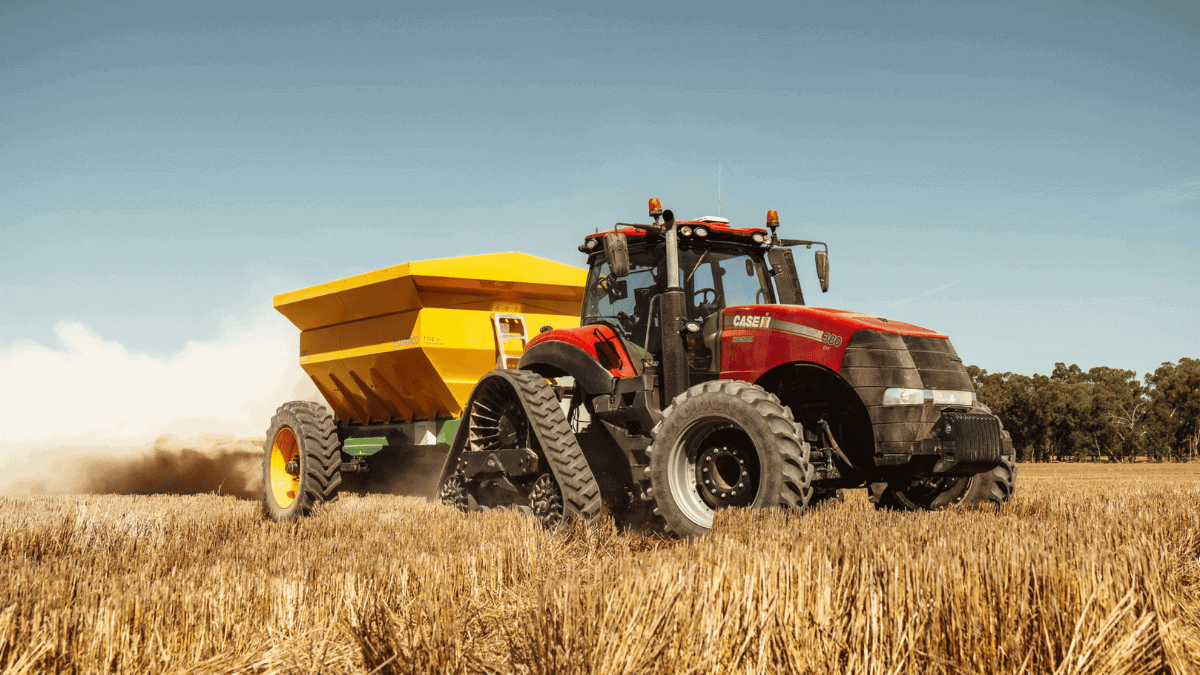
Yet some of the most practical examples of AI and automation are already appearing in fields around the world. Recent episodes of Clarkson’s Farm highlighted technology that would have seemed futuristic only a few years ago, from autonomous tractors capable of navigating fields with remarkable precision to detailed soil mapping systems that help farmers understand exactly what is happening beneath the surface.
At first glance, this might look like better machinery. In reality, it reflects a much broader shift in how decisions are made.
A Field Is No Longer Just A Field
For generations, farmers often treated a field as a single unit. Fertiliser was spread across the entire area, crops were planted using the same approach throughout, and management decisions were applied broadly rather than precisely.
Modern technology is changing that. Today’s systems can divide a field into thousands of individual zones, each with its own characteristics and requirements. Using sensors, satellite imagery and historical data, farmers can build a detailed picture of soil quality, moisture levels, nutrient availability and crop performance across an entire landscape.
The result is a far more detailed understanding of the land. One area may benefit from additional nutrients, another may require less water, while a third may consistently underperform because of underlying soil conditions. What was once viewed as a single field increasingly becomes a collection of unique environments, each generating its own stream of data.
From Data To Decisions
Collecting information is only part of the story. The real value comes from understanding what that information means and deciding how to act on it.
This is where AI and automation begin to play a more significant role. Software systems can analyse large volumes of data and identify patterns that would be difficult to spot manually. Some equipment can automatically adjust fertiliser application as it moves through a field, while other systems use cameras and computer vision to identify weeds and target treatment only where it is needed.
These decisions may seem small in isolation, but their impact can be significant. Reducing waste, improving yields and making more efficient use of resources all become easier when decisions are based on detailed, real-time information rather than broad assumptions.
A Different Kind Of AI Story
What makes these developments interesting is that they challenge some common assumptions about AI adoption.
Much of the public conversation focuses on systems that generate content, answer questions or mimic human communication. In agriculture, the technology is often being applied to a very different problem. The goal is not to sound intelligent. It is to help people make better use of land, time, water and resources.
That shift in focus matters because it highlights a side of AI that receives far less attention. Rather than replacing human expertise, these systems are helping farmers make sense of complex environments, identify patterns and make more informed decisions. The technology becomes another tool supporting human judgement rather than replacing it.
The Future May Depend On Better Decisions
What makes these developments significant is not that tractors can drive themselves or that farmers have access to more data than ever before. It’s that agriculture is becoming increasingly precise.
For generations, farming has involved making decisions in the face of uncertainty. Weather changes, soil conditions vary and no two seasons are ever quite the same. Technology cannot remove that uncertainty, but it can provide a clearer picture of what is happening and help people respond more effectively.
That is where AI appears to be finding some of its most practical applications. Not by replacing expertise, but by helping experts make better decisions.
As discussions continue to focus on chatbots, assistants and content generation, it is easy to overlook what is happening elsewhere. Yet some of the most meaningful changes may be taking place in industries where the technology is being used to solve highly practical problems.
The future of AI may not depend on making machines think more like humans. It may depend on helping humans understand the world around them a little better.
Image sources
- tractor in field-1200: ©Matt Jerome Connor from Pexels via Canva.com