What World War Two Can Teach Us About AI Bias
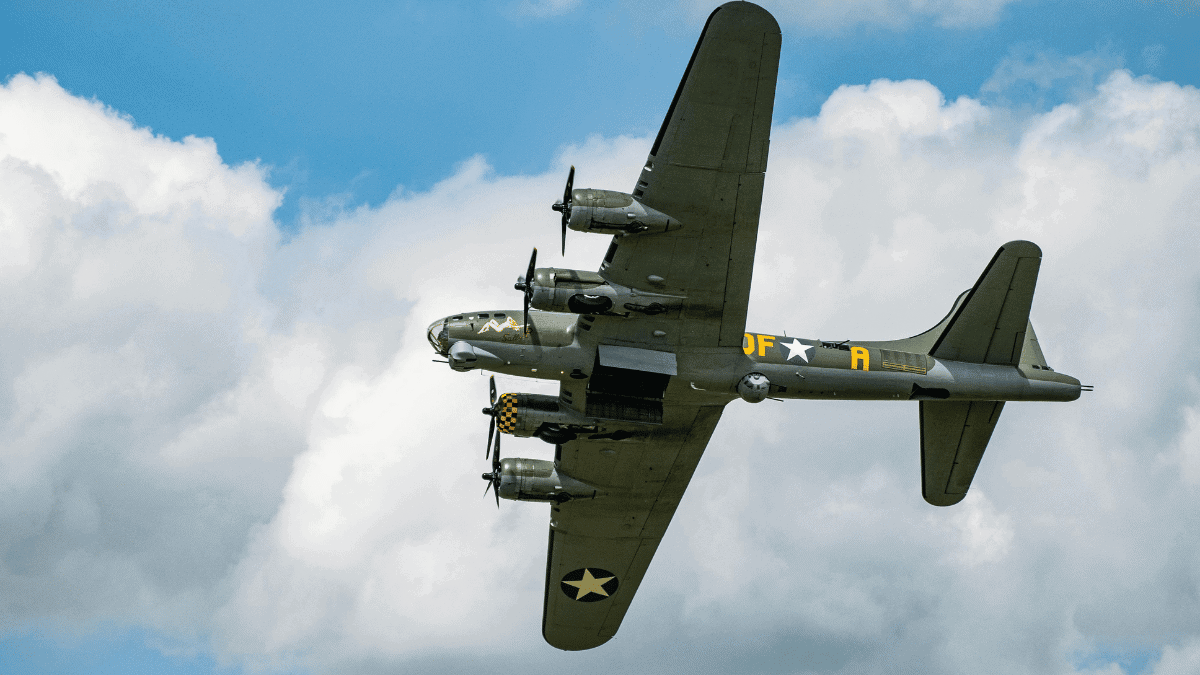
Artificial intelligence is often presented as a technology problem. Better models. Better systems. Better data. But one of the most important lessons about AI bias actually comes from World War Two. Not from Silicon Valley. Not from a modern AI lab. And not from a chatbot gone rogue.
The World War Two Story That Still Matters Today
In a recent conversation with contact centre consultant Paul Weald, The Contact Centre Innovator the discussion unexpectedly turned to World War Two. Not because of military history, but because one wartime statistician still offers one of the clearest explanations of AI bias today.
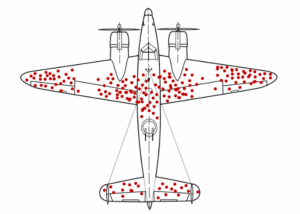
During the war, military analysts were trying to work out how to reduce aircraft losses. As damaged planes returned from combat missions, engineers carefully mapped where enemy fire had hit them. The logic seemed obvious: reinforce the areas with the most bullet holes.
But statistician Abraham Wald challenged that assumption.
Instead, he argued the military should reinforce the areas with no visible damage. Why? Because the planes that had been hit in those areas never made it home. The military had only been studying the aircraft that survived.
“The data that they hadn’t got held the key.”
The lesson is now widely known as survivorship bias: focusing on the examples that survived while missing the ones that disappeared from view entirely.
Nearly a century later, the same problem still exists. Especially in AI.
The Data Organisations Never See
AI systems are entirely shaped by the data they receive. That sounds obvious, but the more important question is often: what data isn’t being included?
Paul reflected on how this same bias already existed long before AI became mainstream. For years, contact centres have relied heavily on call sampling for quality assurance. A small percentage of customer interactions are reviewed, scored, and used to judge compliance or performance. But sampling itself introduces bias.
“We’ve got to think about the data that we don’t currently have.”
If only a fraction of calls are reviewed, organisations may miss patterns hidden elsewhere in the dataset. Customer surveys can create similar problems. Feedback often comes from the people motivated enough to respond, rather than a fully representative customer base.
In other words, businesses may already be making decisions based on incomplete or unrepresentative information. AI does not automatically fix that problem. In some cases, it may actually amplify it.
When AI Reduces Bias – And When It Scales It
There is understandable optimism around AI’s ability to improve customer insight. Instead of manually reviewing small call samples, organisations can now analyse 100% of customer conversations across voice, chat, and email. Patterns that were previously invisible can suddenly become visible at scale.
That has huge potential.
AI systems can identify recurring customer pain points, operational bottlenecks, compliance risks, and behavioural trends far faster than traditional manual approaches. But if the underlying data is incomplete, skewed, or historically biased, AI may simply industrialise those problems rather than eliminate them.
“There are some things even before AI, where there have been elements of bias that we’ve kind of got used to in the industry.”
This is already becoming a growing concern in sectors like healthcare, policing, and recruitment, where historical datasets may not accurately represent broader populations. If a system is trained predominantly on narrow or unbalanced information, its outputs will inevitably reflect those limitations.
“The bias actually probably doesn’t come from the AI, it comes from the data it’s being trained on.”
The Risk Of “Unconsciously Incompetent” AI
One of the most interesting ideas from the conversation was the distinction between being consciously aware of bias versus introducing it unknowingly. In practice, many organisations already approach data with assumptions they may not fully recognise. Teams often begin with a hypothesis and then search for evidence to support it.
That can create a dangerous feedback loop:
- assumptions shape the analysis
- analysis reinforces the assumptions
- AI accelerates the cycle
“The risk is the unconsciously incompetent trials… you don’t even consider bias, and yet you don’t know that you’ve introduced it yourself.”
The greatest risk may not be organisations knowingly deploying flawed AI systems. It may be organisations believing their systems are objective when they are not.
The problem is not always intentional bias. Sometimes it is invisible bias.
And as AI becomes more embedded into operational decision-making, invisible bias becomes harder to spot.
Why Bigger Datasets Alone Won’t Solve The Problem
There is also a growing assumption that more data automatically means better outcomes. But volume alone does not guarantee balance, accuracy, or fairness. The real challenge is diversity of perspective.
Are organisations analysing multiple communication channels? Are they testing assumptions against different scenarios? Are they looking for contradictory evidence rather than confirmation?
These questions matter because AI is rapidly moving from experimental technology into operational infrastructure. What once felt like a prototype capability is increasingly becoming production reality. That changes the stakes.
Bias is no longer just an ethical discussion happening in research papers or conference panels. It becomes something that directly affects customer experiences, business decisions, hiring, compliance, healthcare outcomes, and trust.
And sometimes the most important insight is still the one you cannot immediately see.
Just like the planes that never returned home.
Image sources
- Survivorship-bias-700: ©Martin Grandjean (2021), based on McGeddon and US Air Force hit plot concepts. Licensed under Creative Commons Attribution-ShareAlike 4.0.
- ww2 plane-1200: ©Neville Hawkins from Pexels via Canva.com