AI Should Be A Triage Nurse, Not A Nightclub Bouncer
For years, one of the measures of success for customer-facing technology has been how many conversations it can prevent from reaching a human. Terms such as deflection and containment have become part of the language of customer service, but Mike Aoki from Reflective Keynotes Inc. thinks those words also reveal something about what we’re asking AI to do.
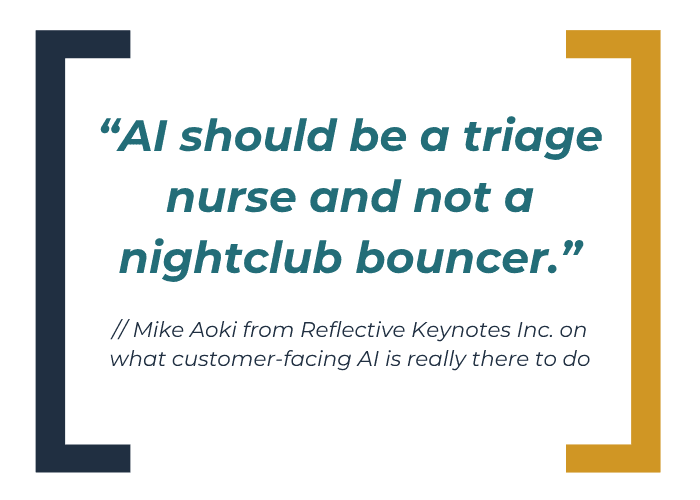
As he pointed out when we spoke, a human agent is usually the most expensive customer service channel, so there is an obvious financial incentive to keep customers away from it. The problem comes when that objective starts shaping the AI itself, with systems designed to keep trying to resolve an issue even when the customer already knows they need something else. Mike has a rather good metaphor for that:
The Nightclub Bouncer
A nightclub bouncer is there to control who gets through the door, and when that thinking is applied to customer service, the human agent effectively becomes the expensive place we’re trying to stop people reaching. AI becomes the gatekeeper standing in the way, with success measured partly by how many customers it can prevent from getting through.
It’s an experience most of us can probably recognise. You know your question is complicated and you’ve already decided you need to speak to someone, but the system keeps asking you to explain the problem differently, offering another answer that doesn’t quite help or sending you around the same loop. Mike argues that many systems are deliberately set up this way, attempting to handle as much as possible and only transferring when the AI eventually determines that it can’t help, or when the customer becomes persistent enough about asking for a human.
In that situation, the AI might technically be doing exactly what it was designed to do, which raises a more interesting question about whether we designed it to do the right thing in the first place.
What Would A Triage Nurse Do?
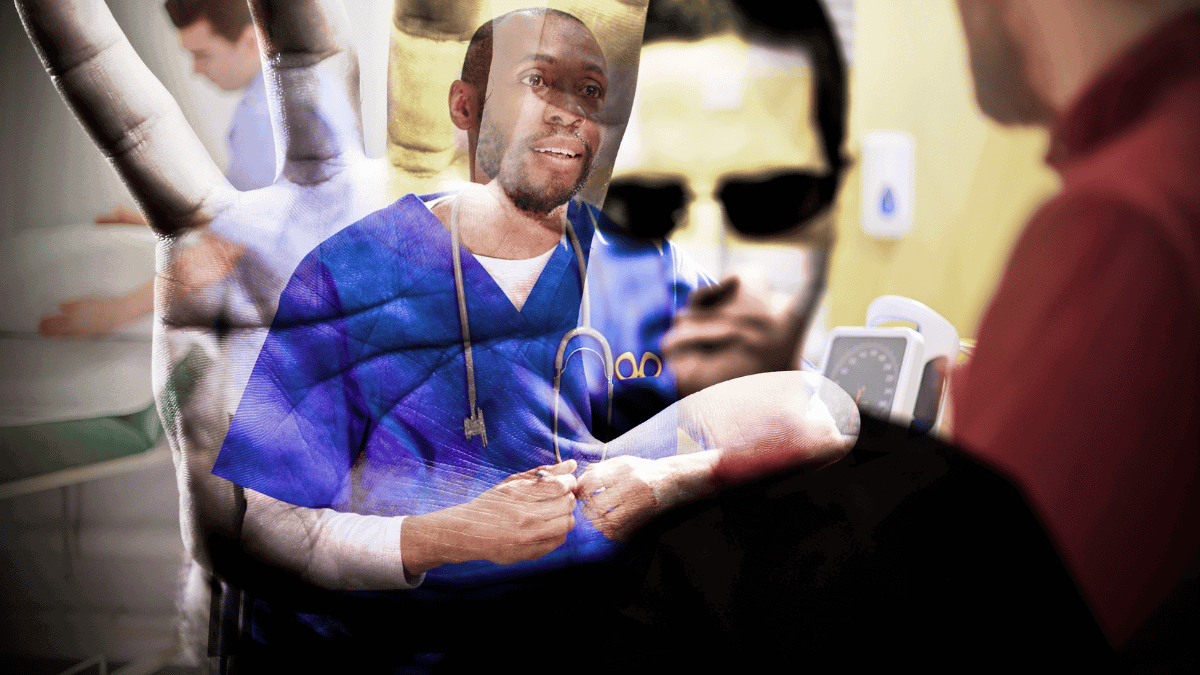
Mike’s alternative is to think about what happens when someone arrives at an emergency department. A triage nurse isn’t there to prevent them from seeing a doctor at all costs, but to understand why they’ve arrived, gather useful information, assess what they need and direct them to the appropriate place.
Applied to AI, that means being clear about what the system can genuinely handle and allowing it to do those things well, while also recognising when something falls outside those boundaries. At that point, getting the customer to the right resource, ideally taking the useful context it has already gathered with them, becomes part of the AI’s job rather than evidence that it has somehow failed.
That can still mean plenty of interactions never need to reach a human. During our conversation, I mentioned someone who had recently used an AI agent to arrange a house viewing and thought the experience was brilliant: she could choose the time she wanted and complete a simple task without needing to speak to anyone. Mike’s point was that the mindset behind that kind of use is different because the objective is to make a defined process easier, while recognising that other interactions will need to go elsewhere.
What Are We Actually Optimising For?
The difference between the bouncer and the triage nurse really comes down to what we decide success looks like. If the aim is to stop as many customers as possible from reaching a human, then every handover looks like something has gone wrong. The AI keeps trying, the customer keeps getting frustrated and eventually they either manage to escape the loop or give up.
But what if the aim was simply to get the customer to the right place?
Sometimes AI will be able to answer the question or complete the task itself. Other times, it might gather some useful information before passing the customer to someone better equipped to help. And sometimes the customer already knows they need a person, in which case making them spend ten minutes proving that to an AI doesn’t really help anyone.
Mike summed up the difference as a change in mindset: handle what you can handle, and know when to defer to somebody else.
Maybe that’s a better way to think about customer-facing AI. It doesn’t have to solve everything to be useful. Knowing when to get out of the way can be useful too.
Image sources
- mike aoki nurse bouncer quote-700: ©Mike Aoki interview with Decoded Thinking
- bouncers and nurse-1200: ©dcdp from Getty Images and ©Canva sturti from Getty Images Signature via Canva.com