The Human Side Of AI Adoption

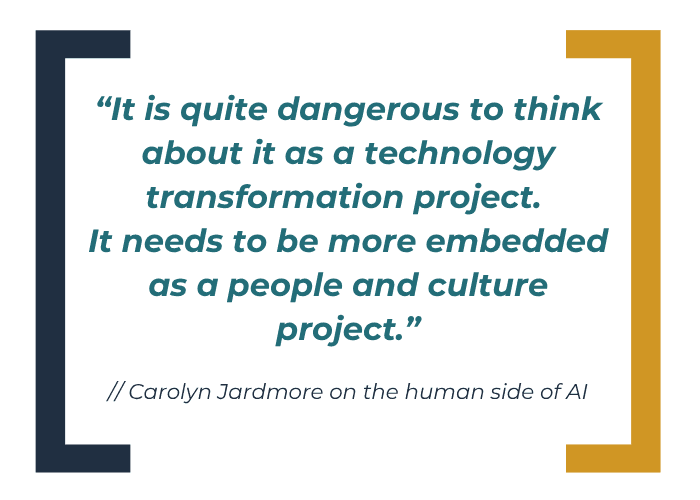
During a recent conversation, Carolyn Jardmore, Managing Director of Cream Consulting shared a perspective that challenged one of the most common assumptions about AI adoption.
At first glance, it seems obvious that AI adoption would be a technology challenge. Organisations need to select platforms, establish governance, train employees, and work out how new tools fit within existing systems and processes. Much of the discussion naturally focuses on the technology itself.
Yet the more organisations experiment with AI, the clearer it becomes that technology is only part of the story.
The real challenge often begins when people are asked to work differently. New tools change workflows, alter expectations, and raise questions that cannot be answered by software alone. Employees need to understand where AI adds value, when they should rely on it, when they should challenge it, and what remains their responsibility. Those questions are not technical. They are human.
This is why culture, communication, and leadership play such an important role in successful adoption. Organisations can deploy technology relatively quickly, but trust takes longer to build. Confidence takes time to develop. New habits rarely appear overnight.
Perhaps that is why so many AI conversations eventually return to the same topic. The technology continues to evolve at remarkable speed, but organisations and the people within them adapt at a very different pace.
AI may be one of the most significant technological shifts many organisations will experience. But as Carolyn’s observation highlights, the challenge is not simply introducing new tools. It is helping people understand them, work alongside them, and feel confident using them.
The technology matters. But the human side matters too.
Watch the conversation
This short excerpt from my conversation with Carolyn explores why organisations often focus on implementing AI, when the bigger challenge is helping people adapt to it.
Image sources
- carolyn jardmore project quote-700: ©Carolyn Jardmore interview with Decoded Thinking
- people in conversation-1200: ©Vitaly Gariev from Pexels via Canva.com