What NASA reveals about the future of human judgement
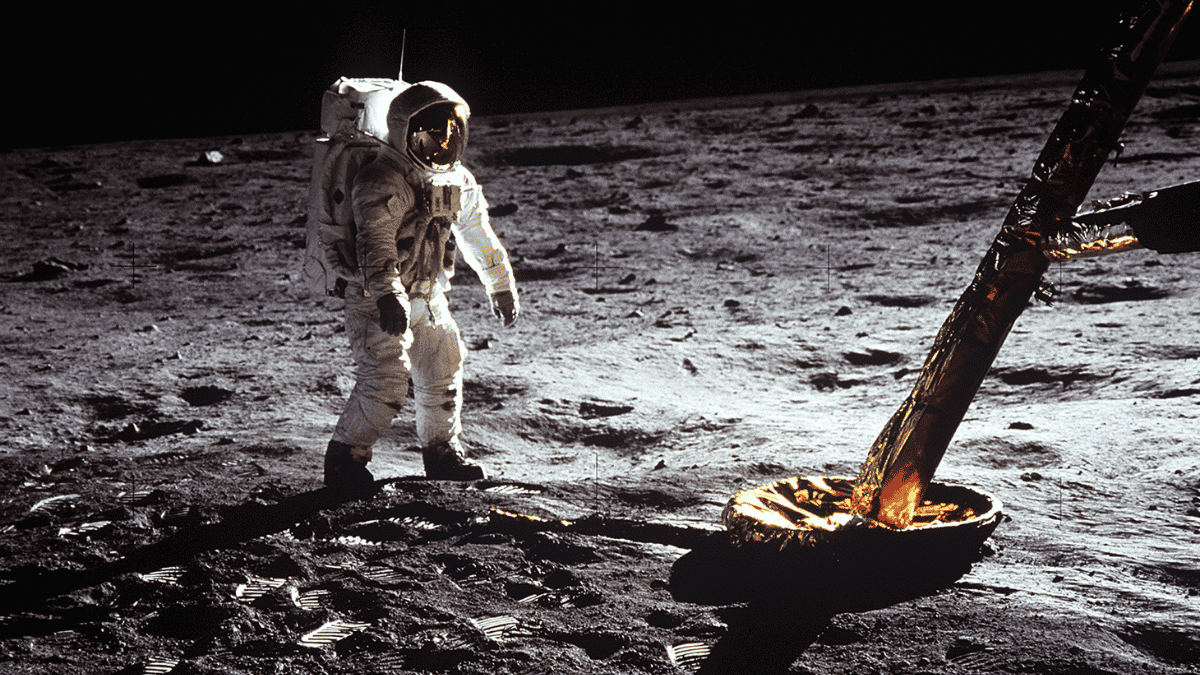
If there is one environment where you would expect automation to dominate, it is space.
Space missions involve extreme conditions, massive amounts of data, and systems too complex for humans to manage alone in real time. NASA already relies heavily on automation, predictive systems, machine learning, and AI-assisted analysis because, at that scale, it has to.
But the interesting part is not simply that NASA uses AI. It is how it still places humans at the centre of interpretation, communication, and judgement.
That approach was visible in preparation for the recent Artemis II Moon mission. Before launch, astronauts received professional photography training designed to help them document the mission and capture scientifically valuable images.
At first glance, photography can sound secondary compared to the engineering, automation, and AI systems involved in modern space missions. But the training reflects something deeper. NASA was not just teaching astronauts how to operate cameras. It was training them how to notice, frame, interpret, and communicate what mattered.
That does not mean humans are outperforming machines in every area. In some cases, the opposite is becoming true.
AI discovering what humans missed
AI has also helped scientists reanalyse old telescope data from projects such as Kepler, identifying potential planets that had previously gone unnoticed.
The data itself was not new. The planets had technically already been “seen”. Humans just had not recognised the patterns.
Planet hunting often relies on detecting tiny dips in a star’s brightness as a planet passes in front of it. Some signals are irregular, faint, or buried within huge amounts of noise. AI systems can process millions of possibilities without getting tired or overly anchored to expected outcomes.
That same shift is now appearing far beyond space exploration;
- In healthcare, AI systems are identifying patterns in scans that clinicians might miss.
- In fraud detection, AI tools are reinterpreting images, behaviour, and evidence.
- In recruitment, AI is increasingly used to reinterpret CVs, language, and suitability signals.
The important change is not just speed. Increasingly, these systems are influencing what humans notice in the first place.
And that may be the more interesting lesson. Space exploration does not appear to treat automation and human judgement as opposing forces. Instead, the two increasingly work together in different ways.
AI can identify patterns. Humans still decide which ones matter.
Even in space missions, astronauts are still being trained to observe carefully, interpret situations, and communicate significance.
The future may not be about humans competing with AI at all. It may be about humans working alongside systems that can process more information than we ever could alone.
Because, even in one of the world’s most advanced missions, humans are still the ones deciding what matters.
Image sources
- walking on moon-1200: ©NASA from NASA CC0 Images via Canva.com