AI Should Assist, Not Substitute
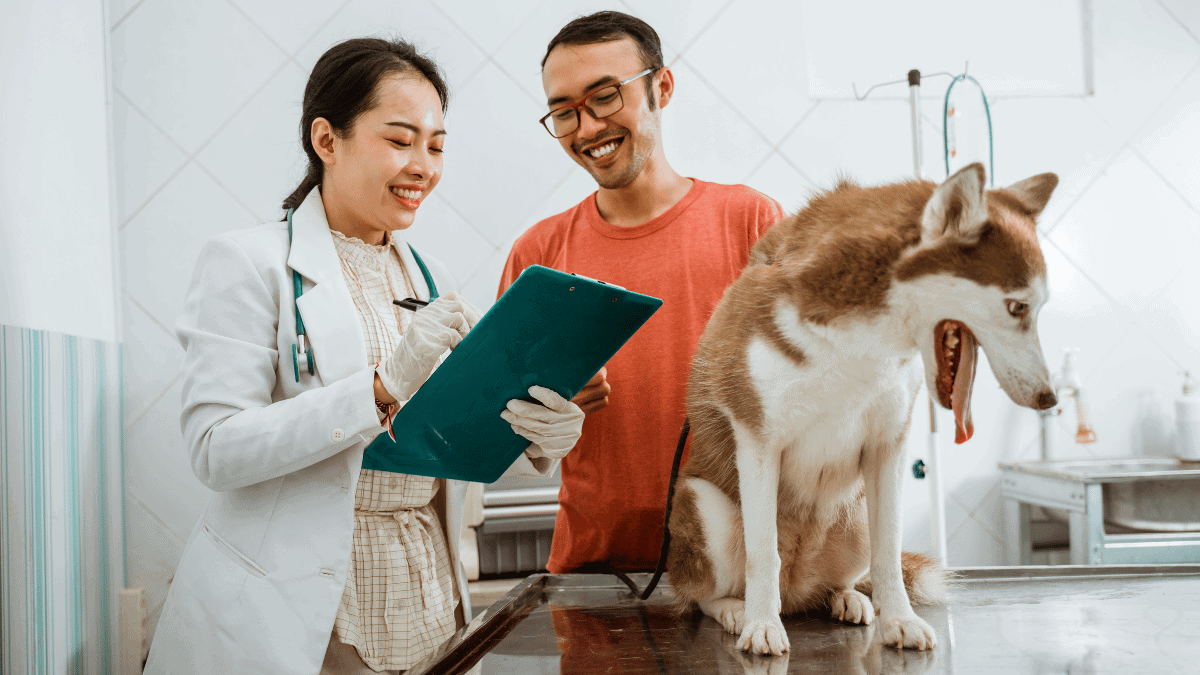
There is a lot that happens between visits to the vet. A dog starts scratching more than usual. Its appetite changes. Something doesn’t seem quite right for a few days and then disappears. You notice it at the time, but unless it feels serious enough to act on straight away, chances are you make a mental note and carry on.
Then, weeks or months later, you’re sitting in front of the vet trying to remember when it started, how often it happened and whether anything else was going on at the same time.
It’s one of the problems Silvia Annunziata is trying to solve with POWSH. The idea actually started before the current AI boom, when Silvia began thinking about how much health information we generate and how difficult it can be to bring it together in a useful way. Her own experience as a first-time pet parent added another layer: there was plenty of information available, but knowing what to trust and what actually mattered wasn’t always easy.
AI has made some of what she imagined much easier to do. Instead of expecting someone to carefully fill in a health record every time something happens, POWSH can take something much messier, like a voice message or a photograph, and turn it into structured information. Over time, those individual observations can start to build a more complete picture of an animal’s health, including small changes or recurring behaviours that might become useful context for a vet later.
But talking to Silvia, what interested me wasn’t how much she thinks AI could eventually do. It was how clear she is about what its role should be.
Finding The Information Isn’t The Expertise
Silvia gave me a really simple example from one of POWSH’s veterinary pilots. A vet was trying to find a previous blood-test result in their own folders and couldn’t find it. The team suggested asking POWSH instead. They did, and the result appeared.
It’s hardly the most dramatic example of AI in healthcare, but that’s probably why I like it.
Finding a blood-test result doesn’t require veterinary expertise. Understanding what that result means does.
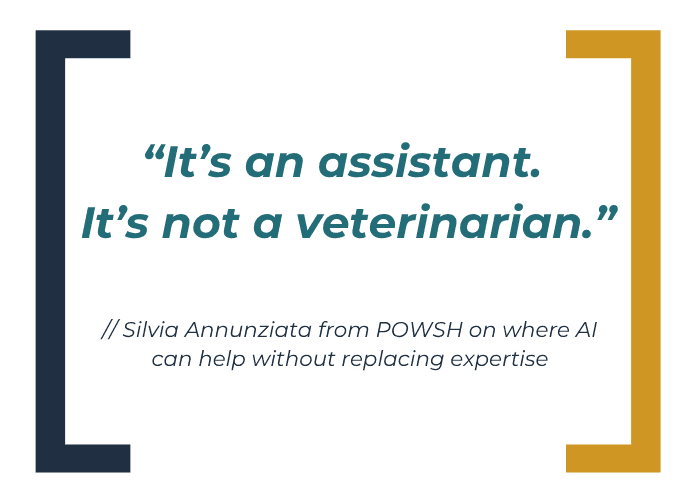
Silvia describes POWSH’s role as doing the work around the expertise rather than trying to replace it. It can find information, organise what has happened and make it easier for a vet to get to the things they need.
“We are covering all the parts that don’t require that expertise,” she says, “and we leave to the vet where he shines the most.”
The same idea applies at the other end of the relationship. Pet parents aren’t expected to become experts either. If they notice something at home, they can record it and move on, while POWSH connects those observations over time to build an ongoing health history. Something that seemed insignificant on its own may become more useful when it appears alongside other symptoms or keeps happening, giving the vet more context when they come to interpret what it means.
The technology is doing something useful, but nobody is pretending it has suddenly become the vet.
And that seems to be the important distinction. The opportunity isn’t necessarily to keep pushing AI further into the expert’s role. It can also be about looking at everything happening around that expertise and asking which parts never really needed an expert in the first place.
Assist, Don’t Substitute
There is a tendency for conversations about AI to focus on substitution. If the technology can perform one part of someone’s job, it doesn’t take long before the conversation moves to whether it could eventually perform the whole thing.
But finding a blood-test result and interpreting it are both part of the same moment without being the same kind of work. Remembering when a symptom first appeared and deciding whether that symptom is significant aren’t the same thing either. That leaves quite a lot of space for AI to be useful without asking it to take over the whole process.
And maybe that’s the more interesting question to ask. Rather than starting with could AI do this person’s job?, we could look at what that person actually does and ask which parts genuinely require their expertise.
Image sources
- silvia annunziata expertise quote-700: ©Silvia Annunziata interview with Decoded Thinking
- vet checkup-1200: ©Odua Imagesy via Canva.com